Matcha vs Coffee: Caffeine, Taste and How to Choose

Matcha and coffee do the same job in the morning, and they go about it differently. Here is how they compare, without picking a fight with your coffee maker.
Caffeine in matcha vs coffee
Harvard Health gives these ranges for an 8-ounce cup:
- Matcha: 38 to 89 mg
- Coffee: 100 to 120 mg
So a typical cup of matcha has less caffeine than a typical cup of coffee. How much less depends on how you make each one. A heaped spoon of matcha or a small, weak coffee can close the gap. More detail in Does Matcha Have Caffeine?
How they feel
Matcha contains L-theanine, an amino acid found in tea. Coffee does not. Many people say matcha feels steadier to them, while coffee hits harder and faster. Others notice no difference. Your own experience is the only one that counts here, so try both on ordinary days and compare.
Taste
- Coffee is roasted, bitter and aromatic, with flavours that run from chocolate to fruit depending on the bean.
- Matcha is fresh, green and savoury, with a light bitterness and a soft sweet finish. See What Does Matcha Taste Like?
Making it
- Coffee needs a machine, a press or a filter, plus the grounds to throw away afterwards.
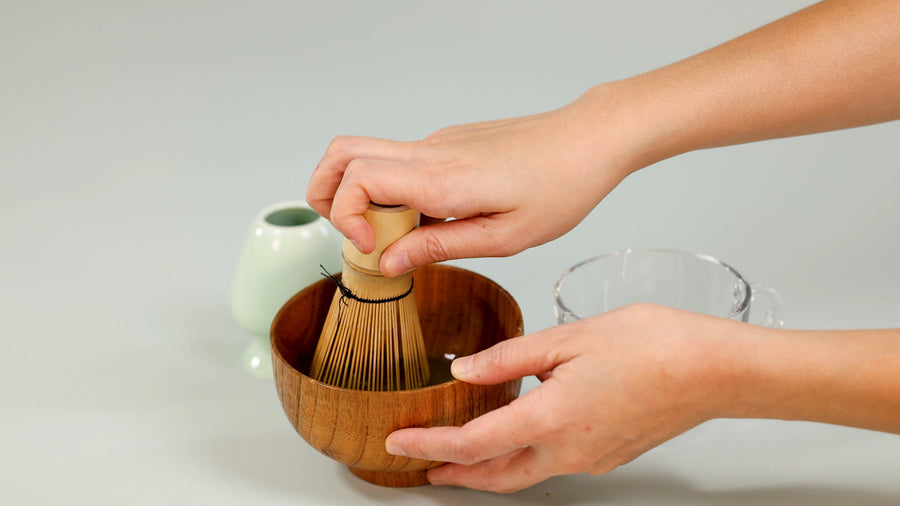
- Matcha needs a bowl and a whisk, or a bottle to shake it in. There is nothing to throw away, because you drink the whole leaf.
What is in the cup
Brewed coffee is an extraction: water passes through the grounds and the grounds are discarded. Matcha is the ground tea leaf itself, stirred into water. Plain versions of both have almost no calories. Milk, syrup and sugar change that for either one.
Which should you choose?
- Choose matcha if you want less caffeine per cup, like green, savoury flavours or want something quick with no machine.
- Choose coffee if you love the roast and the ritual and it sits well with you.
- Choose both. Plenty of people drink coffee some days and matcha on others.
Whichever you pick, Health Canada recommends a maximum of 400 mg of caffeine a day for adults, counted across everything you drink and eat.
Curious? The Rikyū Bundle has what you need to try matcha three ways.
Everything in one box.
Powder, sachets, gummies, a bamboo whisk and a DMG bottle.